
The recent restructuring of the Patriotic League of Uganda (PLU) leadership by General Muhoozi Kainerugaba represents one of the most significant organizational transformations in the movement’s history. Far from being a routine reshuffle, the appointments signal a strategic recalibration designed to reposition PLU from a mobilization platform into a more sophisticated political, economic, and governance-oriented movement capable of influencing Uganda’s development trajectory in the years ahead.
General Muhoozi’s own explanation offers perhaps the clearest insight into the rationale behind the changes:
“We achieved what we set out for with the previous team. The new challenges that face us need a fresh team.”
This statement reveals a leadership philosophy centered on evolution rather than stagnation. It suggests that the first phase of PLU’s existence has largely achieved its foundational objectives and that the movement is now entering a more advanced stage requiring different skills, networks, and expertise.
FROM MOBILIZATION TO INSTITUTIONALIZATION
Since its inception, PLU has primarily focused on patriotism, ideological mobilization, youth engagement, and strengthening support for national development initiatives. During that phase, the movement succeeded in creating a recognizable national presence and attracting members from diverse sectors of society.
However, General Muhoozi’s recent statements indicate a shift in focus.
His emphasis on the government’s target of achieving a $500 billion GDP by 2031 demonstrates that PLU increasingly views itself not merely as a political support organization but as a strategic platform for national transformation.
The movement appears to be transitioning from:
- Political mobilization to policy influence.
- Grassroots organization to institutional engagement.
- Public enthusiasm to measurable results.
- Patriotic messaging to economic transformation.
This evolution helps explain why the new Central Committee includes experienced politicians, legal experts, business leaders, media figures, historical actors, and parliamentary strategists.
The message is clear: PLU is preparing for a more complex role in Uganda’s governance ecosystem.
WHY THE RESHUFFLE HAD TO HAPPEN NOW
Several factors likely influenced the timing of the appointments.
1. A New National Development Phase
General Muhoozi repeatedly references President Museveni’s vision of a $500 billion economy by 2031.
Achieving such an ambitious target requires coordination between government institutions, Parliament, private sector actors, and grassroots structures.
The new Central Committee appears deliberately constructed to bridge those sectors.
2. Transition From Formation to Consolidation
Every successful movement eventually reaches a stage where founding structures must evolve.
The initial PLU team helped establish visibility and legitimacy. The next phase demands specialists capable of policy implementation, stakeholder engagement, legislative influence, and economic mobilization.
3. Strengthening the PLU-NRM Strategic Alliance
General Muhoozi has explicitly stated:
“PLU’s strategic alliance with NRM is based on achieving results for our people.”
This suggests a deliberate effort to align PLU more closely with government priorities while maintaining its identity as a patriotic movement.
The inclusion of senior ministers and parliamentary leaders strengthens this linkage.
4. Preparing for Future Political Realities
Whether viewed through political, economic, or governance lenses, the appointments suggest PLU is preparing for long-term relevance.
The movement appears to be building structures capable of surviving beyond personalities and becoming a durable national institution.
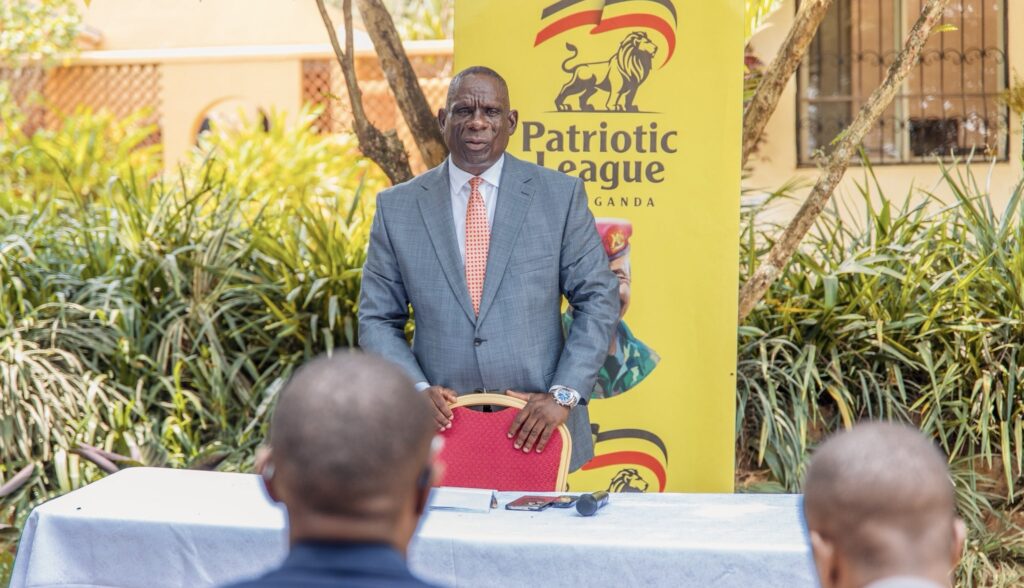
THE STRATEGIC MEANING OF THE KEY APPOINTMENTS
Michael Nuwagira (Toyota)
National Vice Chairman
The retention of Michael Nuwagira signals continuity and organizational stability.
As one of the most recognizable figures within PLU, his continued role provides institutional memory and ensures a smooth transition between the old and new leadership structures.
His role in overseeing the handover of the General Secretary position demonstrates the trust General Muhoozi places in his leadership and organizational capabilities.
The handover is scheduled for Wednesday, 17th June 2026 at Midday at PLU Headquarters, Naguru, Kampala.
Fadil Twalla
General Secretary
This is arguably the most important appointment in the reshuffle.
The General Secretary serves as the engine room of any political organization.
By appointing Fadil Twalla while publicly praising David Kabanda’s service, General Muhoozi sends two messages:
- The movement values performance.
- Leadership transition is part of institutional growth.
Twalla now carries the responsibility of translating PLU’s strategic vision into operational reality.
His success will largely determine how effectively the movement executes its next phase.
David Kabanda
Retained Central Committee Member
Rather than being sidelined, Kabanda remains within the movement’s top decision-making structure.
This reflects political maturity and continuity.
The decision preserves experience while allowing organizational renewal.
Frank Tumwebaze
Central Committee Member
The appointment of Frank Tumwebaze introduces one of Uganda’s most experienced government administrators into PLU’s highest leadership organ.
His extensive experience in public administration, government coordination, and policy implementation could help strengthen PLU’s ability to influence governance outcomes.
Kiryowa Kiwanuka
Central Committee Member and Vice Chairman for Buganda
This appointment carries both political and strategic significance.
Buganda remains Uganda’s most influential region politically, economically, and culturally.
As a respected legal professional and political leader, Kiryowa brings credibility, networks, and strategic reach.
His appointment signals PLU’s intention to deepen its engagement within Buganda.
Balaam Barugahara
Vice Chairman Western Region
The decision to retain Balaam suggests satisfaction with his performance in Western Uganda.
His strength in grassroots mobilization, public relations, and youth engagement remains valuable for PLU’s expansion agenda.
Hussein Kashillingi
Central Committee Member
Kashillingi’s inclusion introduces additional organizational and mobilization capacity.
His appointment strengthens PLU’s operational depth and outreach potential.
Alan Kasujja
Central Committee Member
Perhaps one of the most intriguing appointments.
Kasujja’s media and communications background reflects PLU’s recognition that modern movements require sophisticated communication strategies.
In an era shaped by information warfare, digital influence, and public perception, communication expertise is becoming increasingly important.
Kwame Ruyondo
Representative of NRA Historicals
This appointment bridges PLU with the historical legacy of the National Resistance struggle.
It reinforces continuity between Uganda’s revolutionary past and its future aspirations.
The inclusion of NRA historicals helps preserve institutional memory while ensuring historical perspectives remain represented in decision-making.
Thomas Tayebwa
Special Envoy to Parliament
The appointment of the Deputy Speaker as a parliamentary envoy demonstrates PLU’s intention to strengthen engagement with legislative processes.
It creates a formal channel between the movement and parliamentary leadership.
Jacob Markson Oboth Oboth
Special Envoy to Parliament
Working alongside Tayebwa, Oboth Oboth enhances PLU’s parliamentary reach and strategic engagement.
Together, they provide significant legislative experience and political connectivity.
Sanjay Tanna
Representative of the Business Community
This appointment may be among the most strategically significant.
If PLU genuinely seeks to contribute to a $500 billion economy, business participation becomes indispensable.
Sanjay Tanna’s inclusion signals recognition that economic transformation requires strong partnerships with entrepreneurs, investors, manufacturers, and the private sector.
Andrew Mwenda
Retained Central Committee Member
Mwenda’s retention reflects the continued importance of ideological development and strategic communication within PLU.
His influence in public discourse and policy debates provides intellectual depth to the movement.
Edwin Karugire
Retained Central Committee Member
Karugire’s continued presence ensures consistency and institutional continuity.
It also demonstrates General Muhoozi’s preference for balancing renewal with stability.
Michael Mawanda
Retained Central Committee Member
Mawanda’s retention suggests confidence in his contribution and his ability to support the movement’s expanding objectives.
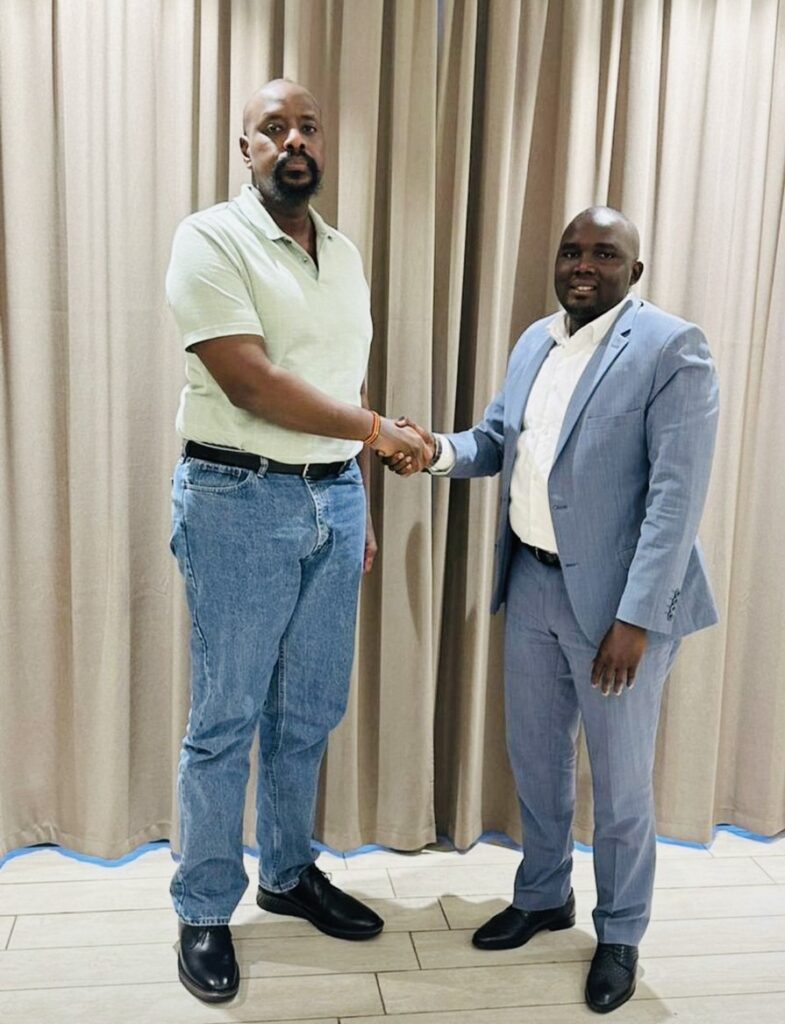
WHAT THE FUTURE HOLDS FOR PLU
Several trends are likely to define the movement’s next chapter.
Increased Focus on Economic Transformation
The repeated emphasis on the $500 billion GDP target suggests PLU will increasingly involve itself in discussions around investment, industrialization, technology, infrastructure, and wealth creation.
Greater Government Accountability
General Muhoozi’s declaration that he will supervise government departments indicates a stronger emphasis on monitoring service delivery and implementation of government programs.
Enhanced Parliamentary Engagement
With parliamentary envoys now embedded in the Central Committee, legislative influence is likely to become more pronounced.
Stronger Regional Structures
The appointment of regional vice chairpersons points toward deeper grassroots penetration and organizational expansion.
More Sophisticated Communication
The inclusion of experienced communicators suggests PLU will invest more heavily in narrative building, public engagement, and strategic messaging.
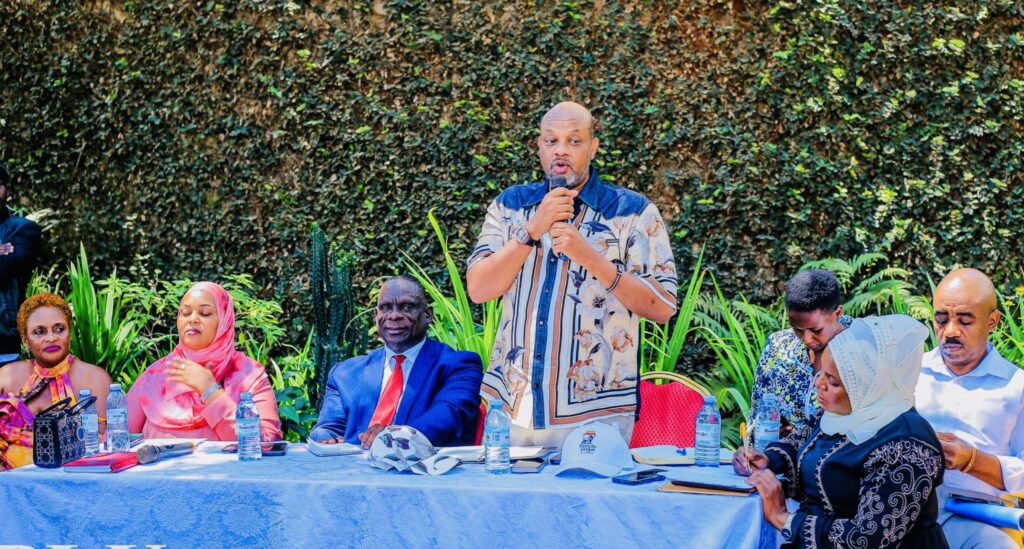
CONCLUSION
The 2026 PLU reshuffle is best understood not as a change of personnel but as a change of mission.
The first generation of PLU leadership focused on building a movement.
The second generation appears tasked with transforming that movement into a national force capable of contributing to governance, economic transformation, legislative engagement, and policy implementation.
General Muhoozi Kainerugaba’s appointments reveal a deliberate attempt to assemble a leadership team that combines political experience, business expertise, communication skills, legal knowledge, historical legitimacy, and grassroots mobilization capacity.
Whether this new structure succeeds will ultimately depend on its ability to translate patriotic rhetoric into tangible outcomes for ordinary Ugandans. However, the composition of the new Central Committee suggests that PLU is positioning itself for a more influential role in Uganda’s future than at any previous point in its existence.
“If the previous phase was about building a movement, the next phase appears to be about building results”