

For nearly four decades, Uganda’s fight against corruption has followed a familiar pattern. Scandals emerge. Investigations begin. Committees are formed. Reports are written. Public outrage rises. Then, gradually, the momentum fades.
What has often been missing is not the identification of corruption but the creation of systems that make corruption difficult, risky, and ultimately impossible to sustain.
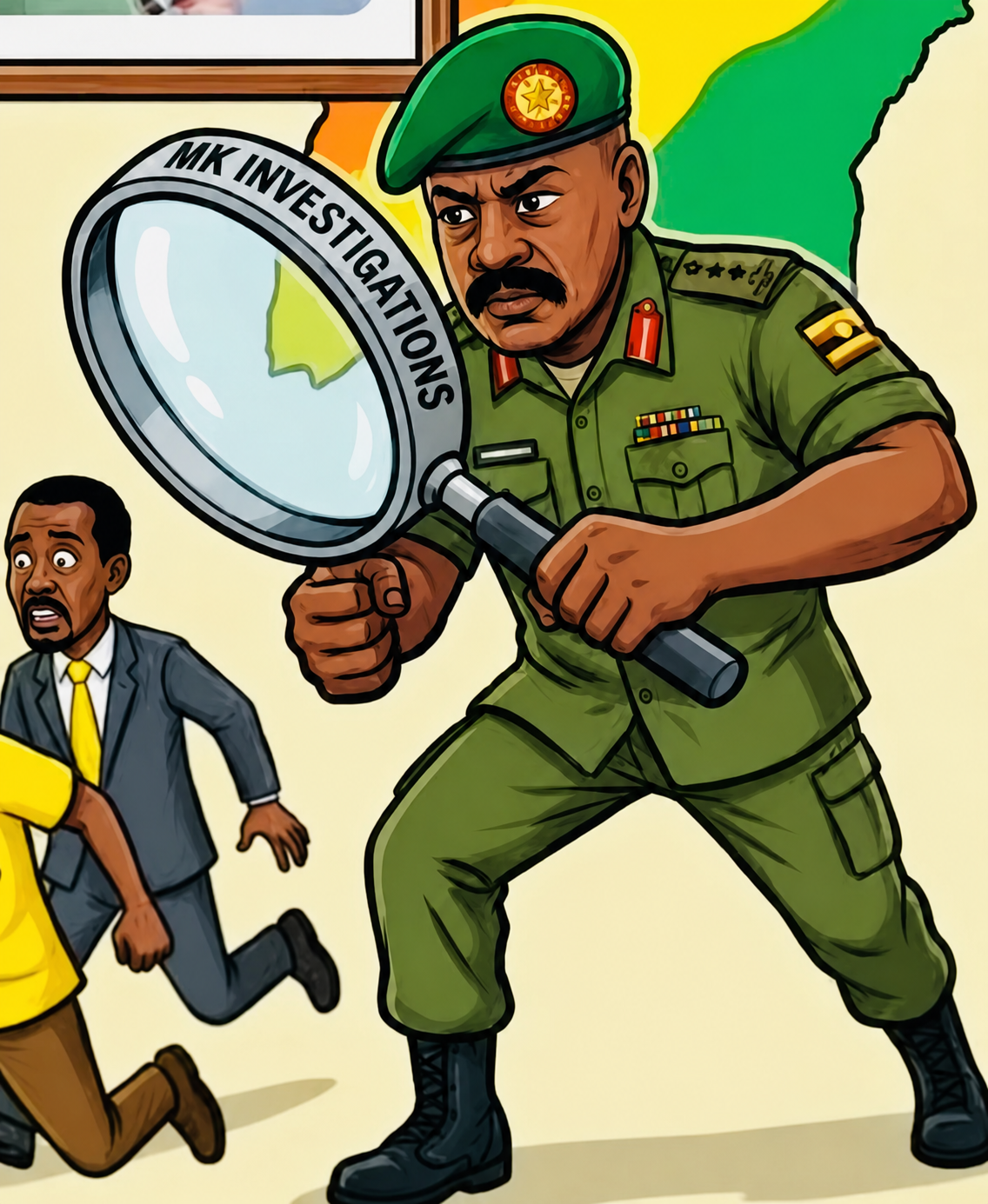
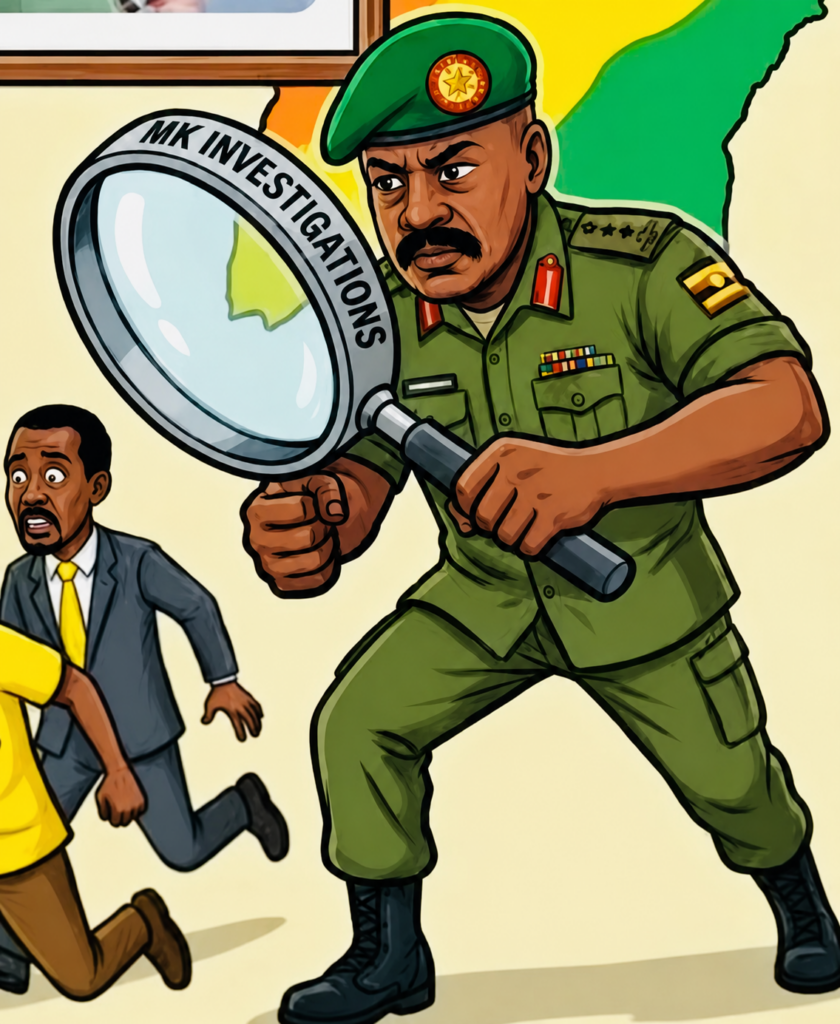
As Gen. Muhoozi Kainerugaba’s Operation Maliza Ufisadie gains national attention, the question confronting Uganda is no longer whether corruption exists. The question is whether this campaign can break from previous approaches and introduce a new anti-corruption model unlike anything the country has seen since 1986.
If the operation is to succeed, it must move beyond arrests and statements and focus on transforming how the government functions.
1. Create Uganda’s First Public Wealth Transparency System
One of the greatest weaknesses in anti-corruption efforts is the inability of ordinary citizens to track unexplained wealth among public officials.
Operation Maliza Ufisadie could champion a mandatory annual digital declaration system where senior public officials, accounting officers, heads of agencies, procurement officers, and political leaders publicly declare:
– Assets owned
– Major business interests
– Properties acquired
– Shareholding positions
– Income sources
The declarations should be available for public scrutiny online.
The principle is simple:
If public service is honest, transparency should not be feared.
Countries that have significantly reduced corruption have often relied on asset transparency as a first line of defense.
2. Introduce Real-Time Government Expenditure Tracking
Uganda traditionally discovers corruption after money has already disappeared.
A revolutionary approach would be to monitor public spending before losses occur.
Every ministry, district, municipality, and government agency could be required to publish real-time expenditure dashboards showing:
– Funds received
– Funds spent
– Contractors paid
– Project progress
– Remaining balances
Citizens, journalists, civil society organizations, and Parliament would then monitor expenditure in real time.
This would shift Uganda from reactive anti-corruption to preventive anti-corruption.
3. Launch a National Whistleblower Reward Program
Many corruption cases are known internally long before they become public scandals.
Yet whistleblowers often remain silent due to fear and lack of incentives.
Operation Maliza Ufisadie could establish Uganda’s first major whistleblower reward mechanism.
Individuals whose information leads to:
– Recovery of public funds
– Convictions
– Prevention of major losses
could receive a percentage of recovered assets.
This would transform millions of citizens into active anti-corruption partners.
Every corrupt network would face the risk that one insider could expose the entire scheme.
4. Use Artificial Intelligence to Detect Corruption Patterns
Most anti-corruption investigations begin after complaints.
Modern technology allows corruption to be detected automatically.
Government payment systems could be integrated with Artificial Intelligence tools capable of identifying:
– Duplicate payments
– Inflated contracts
– Suspicious procurement patterns
– Ghost employees
– Unusual expenditure spikes
Rather than waiting for scandals, the system would continuously identify red flags.
Corruption would become easier to detect and harder to conceal.
5. Establish a National Corruption Blacklist
One recurring problem is that individuals implicated in corruption often reappear in other government positions.
Operation Maliza Ufisadie could create a legally managed public register of individuals convicted of corruption-related offenses.
Such individuals could face restrictions from:
– Holding senior public office
– Serving on procurement committees
– Managing public funds
– Directing government projects
This would ensure that corruption carries lasting consequences.
6. Conduct Lifestyle Audits of High-Risk Officials
One of the most effective tools used internationally is the lifestyle audit.
The question is straightforward:
Does an individual’s lifestyle match their known income?
Operation Maliza Ufisadie could prioritize annual audits targeting:
– Procurement officers
– Accounting officers
– Project managers
– Revenue collection officials
– Senior administrators
Where wealth substantially exceeds lawful income, investigations would automatically follow.
This shifts attention from rumors to evidence.
7. Introduce Citizen Oversight Committees
Corruption thrives when monitoring is centralized.
Uganda could pioneer community-based oversight systems where local citizens monitor public projects.
For every major government project:
– Schools
– Roads
– Health centers
– Markets
– Water projects
local committees would verify implementation and report progress through digital platforms.
This would make citizens active guardians of public resources.
8. Publish Every Government Contract Online
Many corruption scandals originate in procurement.
Operation Maliza Ufisadie could require all government contracts above a specified threshold to be published publicly.
The public would see:
– Contractor names
– Contract values
– Completion timelines
– Scope of work
Transparency would significantly reduce opportunities for inflated pricing and hidden deals.
9. Create Fast-Track Anti-Corruption Courts
Justice delayed often becomes justice denied.
Specialized anti-corruption courts could handle corruption cases under strict timelines.
For example:
– Investigation completed within six months.
– Trial concluded within twelve months.
– Asset recovery proceedings initiated immediately after conviction.
The public would begin seeing tangible outcomes rather than endless investigations.
10. Recover Assets Before Celebrating Arrests
Historically, anti-corruption campaigns often focus on arrests.
Citizens, however, are more interested in recovering stolen money.
Operation Maliza Ufisadie should prioritize:
– Asset tracing
– Property seizure
– Financial recovery
– Compensation to affected institutions
Success should be measured by billions recovered, not headlines generated.
11. Create a National Integrity Scorecard
Every ministry, district, and agency could receive an annual integrity rating based on:
– Audit performance
– Procurement compliance
– Service delivery outcomes
– Corruption complaints
– Financial accountability
The rankings would be public.
Competition among institutions could become a powerful driver of reform.
12. Protect the Operation from Political Selectivity
The greatest test facing Operation Maliza Ufisadie is credibility.
Ugandans have seen investigations before.
What they have rarely seen is accountability applied consistently across all levels of power.
The operation’s success will depend on one principle:
No exemptions. No sacred cows. No protected networks.
The moment the public perceives selective enforcement, confidence in the campaign will diminish.
The law must be seen to apply equally regardless of rank, influence, wealth, ethnicity, political affiliation, or personal connections.

The Historic Opportunity
Operation Maliza Ufisadie stands at a critical crossroads.
Uganda has already experienced commissions, audits, arrests, investigations, and public inquiries.
What the country has not fully experienced is a technology-driven, citizen-centered, institution-based anti-corruption revolution.
If Gen. Muhoozi Kainerugaba and the operation can champion transparency, digital accountability, asset recovery, citizen oversight, artificial intelligence monitoring, and equal enforcement of the law, they may fundamentally alter Uganda’s governance landscape.
The true measure of success will not be the number of speeches delivered or suspects arrested.
It will be the amount of public money recovered, the strength of institutions created, and the restoration of public trust.
Only then will Operation Maliza Ufisadie be remembered not as another anti-corruption campaign, but as the moment Uganda finally turned the tide against corruption.
KMS Media Political Desk | 2026