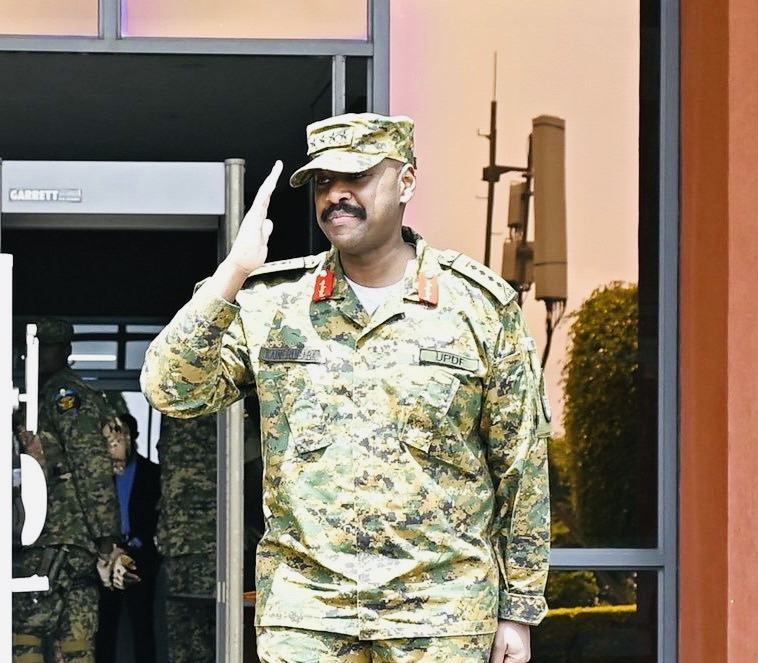

A fresh political and diplomatic debate has emerged following remarks by General Muhoozi Kainerugaba announcing the cancellation of a contract involving a Turkish company that had been selected to participate in the construction of Uganda’s Standard Gauge Railway (SGR).
In a statement that quickly gained public attention, General Muhoozi declared:
“We have cancelled the contract with the Turkish company to build the SGR. We will get another one that is more worthy of our country.”
The comments were followed by reactions from Hon. David Kabanda, a member of the Patriotic League of Uganda (PLU) Central Committee and former Secretary General, suggested that PLU supporters should actively demonstrate their dissatisfaction.
“If the Turks are still disturbing you, Afande ffe wetuli. The problem is you suspended the demonstration,” Kabanda remarked.
Subsequently, General Muhoozi issued another directive stating:
“All Security Services are instructed to leave our supporters/ordinary Ugandans to demonstrate at the Turkish Embassy on Friday 19th June 2026!”
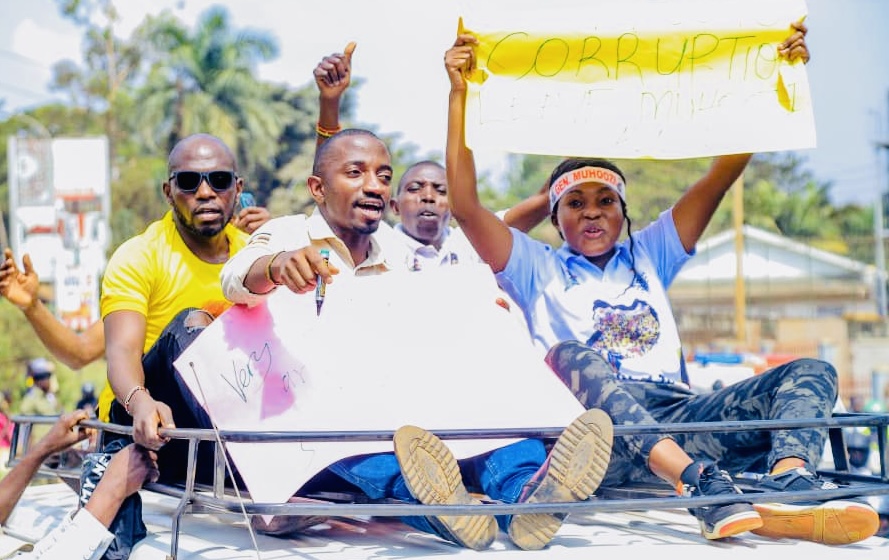
Hon. Kabanda later mobilized supporters, announcing plans for a major protest at the Turkish Embassy in Kampala.
“All Members of PLU and supporters of our Chairman General Muhoozi Kainerugaba, we shall be staging an energetic demonstration/protest on 19th June 2026 at the Turkish Embassy in Kampala. Come in big numbers. More details to be given in due course”
The Significance of the SGR Project
The Standard Gauge Railway remains one of Uganda’s most strategic infrastructure projects. Designed to improve transportation efficiency, reduce cargo costs, and enhance regional trade competitiveness, the railway is expected to play a significant role in Uganda’s long-term economic transformation.
Any cancellation of a major infrastructure contract naturally attracts public scrutiny because of its implications for project timelines, financing arrangements, investor confidence, and international partnerships.
The statements attributed to General Muhoozi suggest dissatisfaction with the previous contractual arrangement and indicate a preference for seeking alternative partners perceived to better serve Uganda’s national interests.
Political Messaging and National Sovereignty
The development appears to be framed by supporters as a matter of national dignity and sovereignty.
Among sections of PLU supporters, the cancellation is being interpreted as a demonstration of Uganda’s determination to prioritize national interests over external commercial considerations. The messaging emerging from PLU circles emphasizes accountability, value for money, and ensuring that strategic national projects are handled by partners capable of delivering outcomes aligned with Uganda’s development aspirations.
For supporters of General Muhoozi, the move reinforces his image as a leader willing to challenge decisions perceived to be unfavorable to Uganda.
Governance and Institutional Considerations
The controversy also raises important governance questions.
Major infrastructure contracts are typically governed through established legal, procurement, and diplomatic frameworks. Experts argue that while governments retain the right to review, renegotiate, or terminate contracts under specific circumstances, such actions must follow due process to avoid legal disputes, compensation claims, and reputational risks.
Good governance principles require transparency regarding:
- Reasons for contract termination.
- Financial implications for taxpayers.
- Legal obligations arising from cancellation.
- Criteria for selecting a replacement contractor.
- Timelines for continuation of the project.
Stakeholders will likely seek clarification from relevant government institutions regarding the status of the SGR project and the next steps for implementation.
Potential Impact on Uganda-Turkey Relations
The planned demonstration at the Turkish Embassy introduces a diplomatic dimension to the issue.
Uganda and Turkey have enjoyed growing bilateral relations over recent years, particularly in trade, investment, education, construction, and defense cooperation.
Should the demonstrations proceed as announced, diplomatic observers will be closely watching whether the protests remain peaceful and whether they influence official relations between Kampala and Ankara.
While public demonstrations are recognized democratic expressions when conducted lawfully, sustained tensions could create challenges for business confidence and future engagements between stakeholders from both countries.
Security and Public Order
General Muhoozi’s call directing security services to allow supporters and ordinary citizens to demonstrate has generated significant discussion.
From a governance perspective, peaceful assembly is protected under constitutional frameworks, provided demonstrations remain lawful and non-violent. Security agencies traditionally face the responsibility of balancing citizens’ rights to assemble with the need to maintain public order and protect diplomatic missions.
The conduct of both organizers and security personnel on 19th June will therefore be closely monitored by political observers, civil society organizations, and diplomatic representatives.

Possible Outcomes of the Demonstration
Several outcomes could emerge from the planned protest:
Increased Public Attention
The demonstration may elevate public discussion regarding the SGR project and the circumstances surrounding the cancellation of the Turkish contract.
Pressure for Greater Transparency
Government institutions may face increased calls to provide detailed explanations about procurement processes and future plans for the railway project.
Political Consolidation
The mobilization may strengthen PLU’s organizational visibility and demonstrate the movement’s ability to mobilize supporters around national issues.
Diplomatic Engagement
The situation could encourage direct dialogue between Ugandan authorities and Turkish representatives aimed at managing any emerging tensions.
Future Perspectives
Looking ahead, the most important question remains the future of Uganda’s Standard Gauge Railway project.
If a new contractor is selected efficiently and transparently, the cancellation could ultimately be viewed as a strategic decision intended to secure better terms for Uganda. However, prolonged delays could affect project implementation timelines and increase costs.
The coming weeks are expected to provide greater clarity regarding:
- The official status of the cancelled contract.
- Identification of potential replacement contractors.
- Government strategy for financing and executing the SGR.
- The long-term implications for Uganda’s infrastructure agenda.
Conclusion
The cancellation of the Turkish SGR contract and the planned demonstration at the Turkish Embassy represent more than a political event; they highlight broader debates about national sovereignty, infrastructure governance, accountability, and Uganda’s international partnerships.
Whether viewed as a bold assertion of national interests or a development requiring careful diplomatic management, the issue has already become a significant topic in Uganda’s political discourse. The response of government institutions, the conduct of demonstrators, and the future direction of the SGR project will ultimately determine how this moment is remembered in Uganda’s infrastructure and political history.
KMS Media Analysis Desk