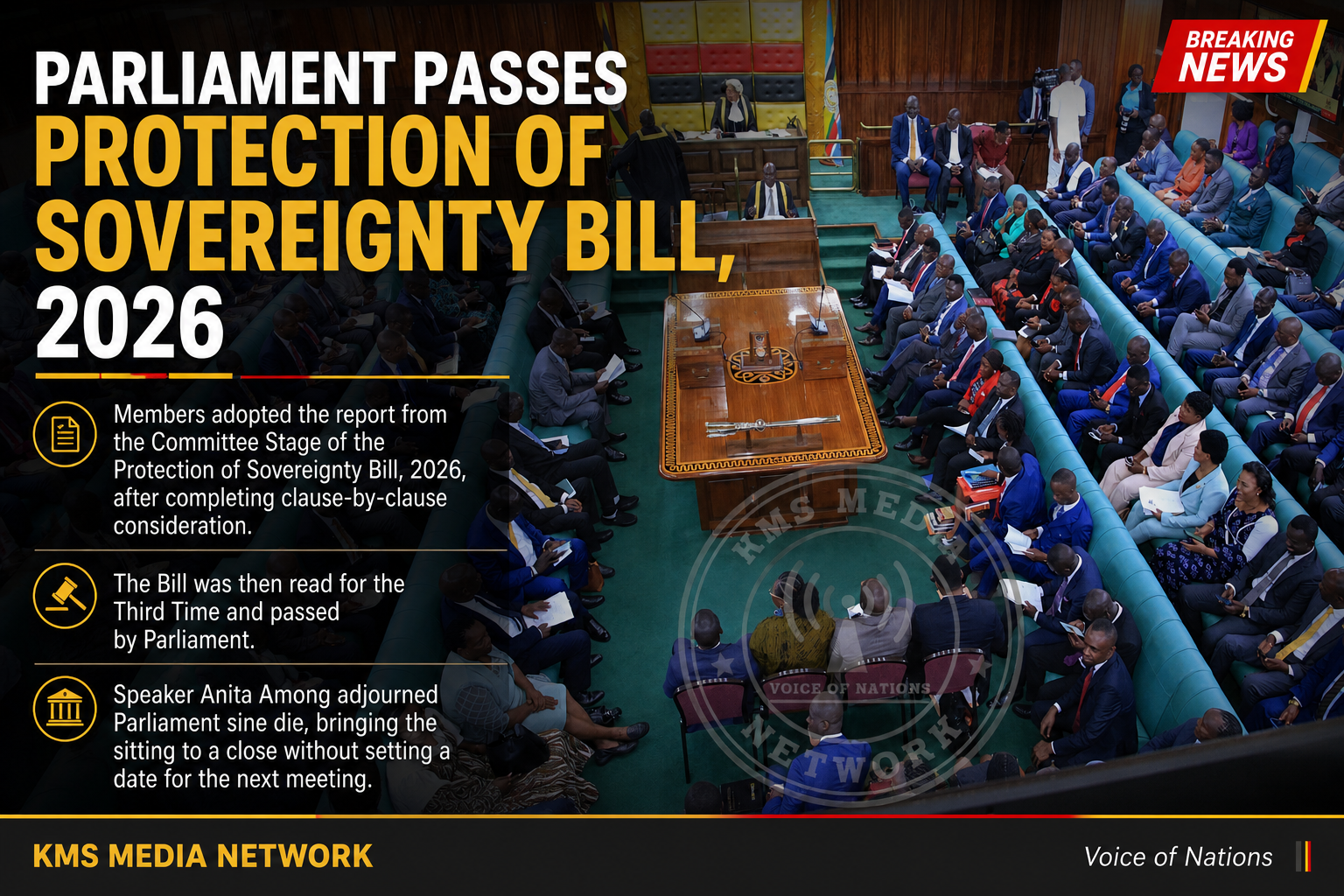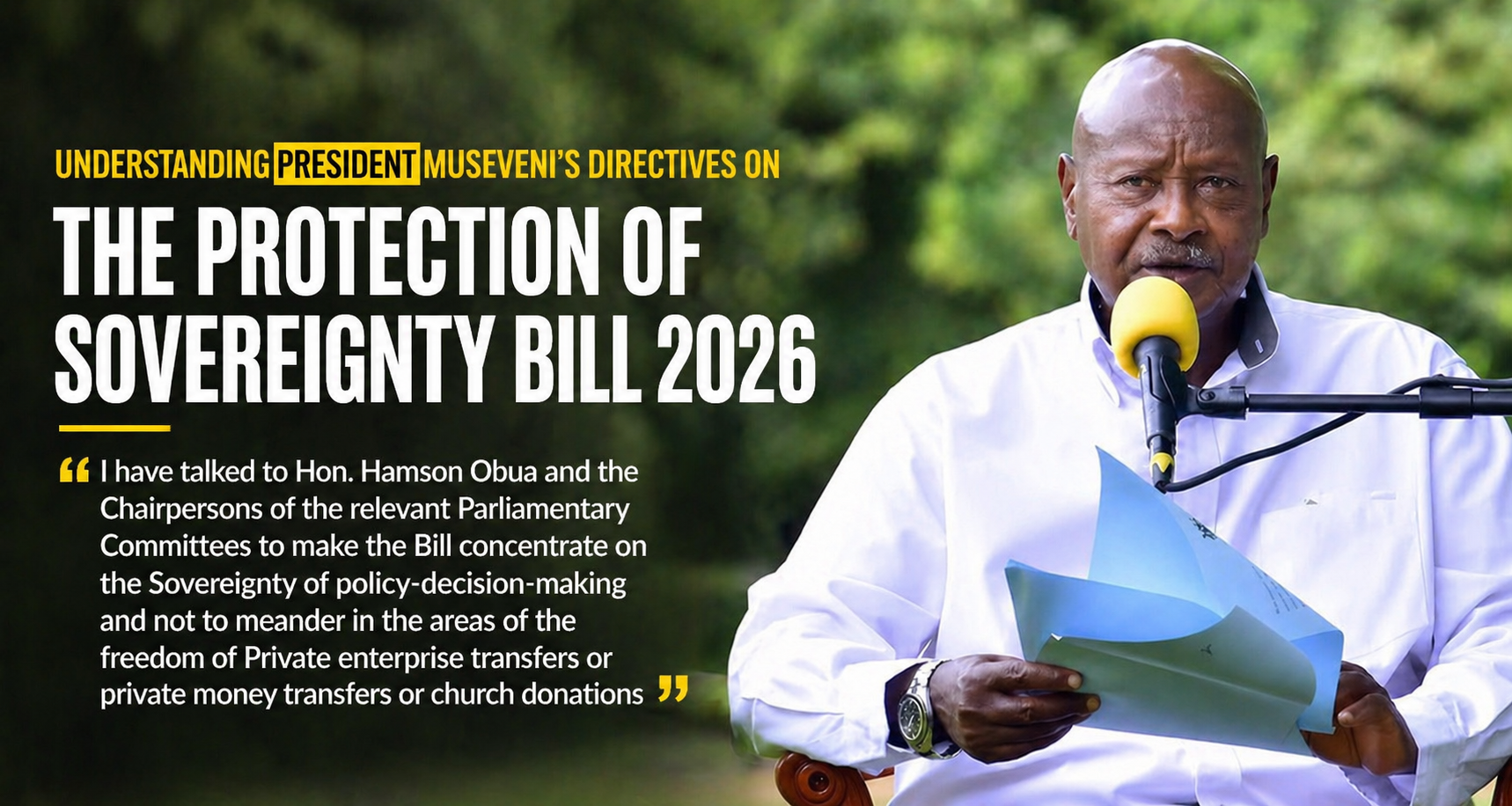

Uganda’s political landscape has once again been stirred by the passage of the Protection of Sovereignty Bill, a legislative move that has drawn both strong support and sharp analysis. At the center of this insights are two powerful narratives: one from President Yoweri Kaguta Museveni, grounded in history and caution, and another from General Muhoozi Kainerugaba, projecting confidence in Uganda’s strength and future security.
Together, these perspectives reveal a broader national conversation, one that grapples with Uganda’s past vulnerabilities, present realities, and future ambitions.
A Historical Warning Against Foreign Interference
President Museveni’s message to the nation, particularly addressing the Bazzukulu (grandchildren), is deeply rooted in Uganda’s historical experience. His central argument is simple but forceful: sovereignty must be protected at all costs.
He invokes the events surrounding Idi Amin’s 1971 coup, a turning point in Uganda’s history. According to Museveni, foreign powers including actors from Israel and the United Kingdom played a role in supporting Amin’s rise to power. This intervention, he argues, disrupted Uganda’s political trajectory and undermined regional ambitions such as the East African Community Federation and broader African liberation movements.
The consequences were severe. Uganda endured years of instability, economic decline, and loss of life. Museveni emphasizes that rectifying this externally influenced disruption took nearly a decade and came at a heavy cost.
By recalling this history, the President is not merely revisiting the past, he is issuing a warning. The message is clear: allowing foreign influence in domestic affairs risks repeating painful chapters of Uganda’s history.
Sovereignty as a Principle of Mutual Respect
At the heart of Museveni’s argument is the principle of reciprocity: nations should respect each other’s independence. His use of the Luganda phrase “mutuleke tukole ebyaffe…” underscores a call for mutual non-interference Uganda should be allowed to manage its internal affairs just as other nations do without external intrusion.
Supporters of the bill see it as a necessary shield against undue foreign pressure, particularly in an increasingly interconnected world where global actors state and non-state alike often influence domestic policies in developing nations.
Analysts, however, worry that such legislation could be interpreted broadly, potentially affecting civil liberties, international partnerships, or the flow of foreign aid and investment. The debate, therefore, is not just about sovereignty, but about how it is defined and applied in practice.
A Forward-Looking Vision of Strength and Security
While President Museveni’s narrative leans on historical caution, General Muhoozi Kainerugaba presents a forward-looking perspective centered on national strength. His statement reflects confidence in Uganda’s capabilities, particularly in defense and technological advancement.

By asserting that “Ugandans are the most intelligent people on earth” and highlighting efforts to develop weapons for national defense, Muhoozi frames sovereignty not just as a political principle, but as a matter of security preparedness in an “unstable world.”
This perspective aligns with a broader global trend where nations are increasingly prioritizing self-reliance in defense and strategic industries. For Uganda, it signals an ambition to not only protect its borders but also to assert itself as a capable and independent actor on the international stage.
The Intersection of History and Ambition
Taken together, the two narratives form a cohesive though complex vision:
- Museveni provides the historical justification for safeguarding sovereignty.
- Muhoozi offers the strategic direction for securing it in the future.
This dual approach resonates with many Ugandans who see the need to learn from the past while preparing for emerging global challenges. However, it also raises important questions about balance: how Uganda can protect its sovereignty without isolating itself, and how it can strengthen its defense without escalating tensions or diverting resources from development priorities.
Conclusion: A Defining Moment for Uganda
The passage of the Sovereignty Bill represents more than a legislative milestone it is a statement about Uganda’s identity and direction. It reflects a nation determined to assert control over its destiny, shaped by historical lessons and driven by aspirations of strength and independence.
As Uganda moves forward, the real test will lie in implementation. The challenge is to ensure that sovereignty serves as a foundation for unity, stability, and progress rather than division or constraint.
In navigating this path, Uganda stands at a defining moment: balancing the weight of its history with the promise of its future.