
The sudden exit of General Muhoozi Kainerugaba from Twitter (X) has triggered a fresh wave of speculation within Uganda’s evolving political landscape particularly among supporters of the Patriotic League of Uganda (PLU). What might have appeared as a routine digital withdrawal has instead exposed deeper internal tensions, rivalries, and ideological confusion within the movement.
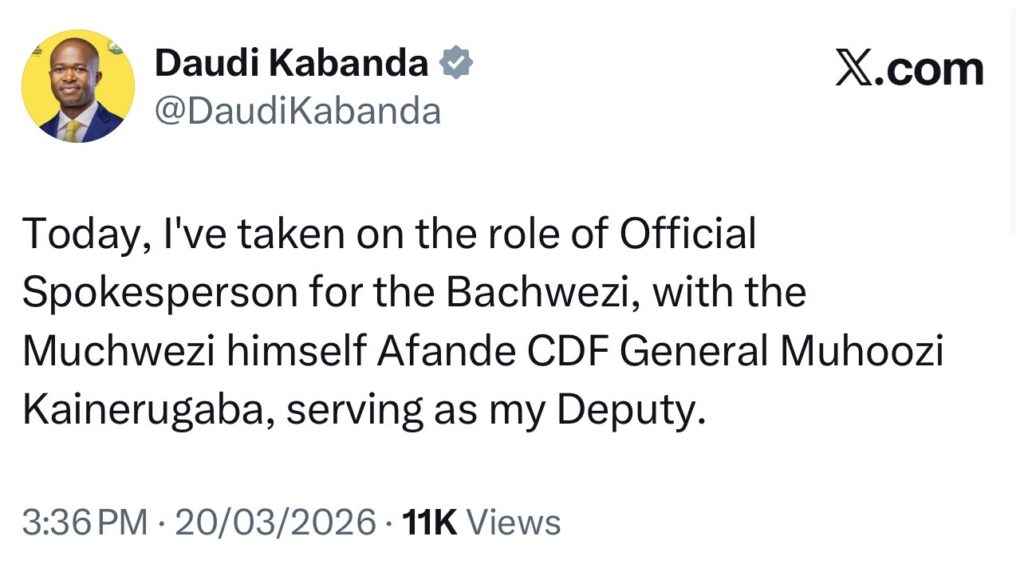
At the center of this storm is a statement by Hon.David Kabanda, who was previously appointed by General Muhoozi Kainerugaba to take over the “Bachwezi” came to pass as he declared “Today, I’ve taken on the role of Official Spokesperson for the Bachwezi, with the Muchwezi himself Afande CDF General Muhoozi Kainerugaba, serving as my Deputy”
The Tweet That Sparked a Political Firestorm
Hon. David Kabanda’s statement, posted shortly after Gen. Muhoozi’s exit from Twitter, can been interpreted in multiple ways: as political satire, coded messaging, or a deliberate attempt to assert influence within the movement.
The reference to the “Bachwezi” a semi-mythical ancient dynasty often invoked in Ugandan political folklore adds a layer of symbolism that blurs the line between political messaging and cultural mythology. Such references are increasingly being used to build identity narratives around emerging political factions.
The Gashumba Factor: Foot Soldiers Voice
The situation is further complicated by the ongoing online clashes between Hon.Kabanda and Frank Gashumba. Their exchanges largely through videos and social media commentary have exposed personal rivalries that now appear to be influencing broader movement dynamics.
Gashumba, widely regarded by grassroots supporters as a mobilizer and advocate for cadres, has been credited by many with sustaining early organizational efforts before the formalization of PLU structures.
Supporters claim:
- He facilitated early coordination meetings.
- He supported youth cadres financially and logistically.
- He played a behind-the-scenes role in mobilization efforts ahead of key regional engagements.
These claims, while difficult to independently verify in full, are consistent with patterns seen in emerging political movements where informal actors play critical foundational roles.
Silence from Within: Supporters Speak Out
A review of supporter commentary reveals a movement grappling with internal disillusionment.
One prominent theme is leadership failure and organizational breakdown. Supporters describe PLU as:
- “Disorganized”
- “Directionless”
- “In a state of ambiguity”
Another recurring concern is elite dominance and exclusion, with accusations that:
- Some leaders are “self-seekers”
- Internal conflicts are being fueled by personal interests
- Grassroots cadres are being sidelined or manipulated
A particularly striking observation from supporters highlights the paradox of proximity to power:
“Being in proximity of power doesn’t guarantee a lifetime seat at the table… someone you fought yesterday might determine your future tomorrow.”
This reflects a growing awareness among members about the volatility of internal alliances and the absence of institutional safeguards.
Financial Contributions and Loyalty Divides
Supporters also point to unequal recognition of contributions within the movement. Individuals such as:
- Hon Balam Barugahara Ateenyi
- Michael Nuwagira Kaguta (referred to as “Chairman Toyota” in supporter circles)
are cited as having made huge significant financial and strategic contributions.
At the same time, Gashumba is praised for grassroots engagement, particularly among junior cadres creating a contrast between financial backers and field mobilizers.
This divide is now becoming a fault line:
- Elite contributors vs grassroots organizers
- Formal leadership vs informal influence networks
Structural Weaknesses: A Movement Without Systems?
Perhaps the most serious concern raised is the absence of institutional structures within PLU.
Supporters openly admit:
- There are weak governance systems
- Leadership roles are unclear or contested
- Decision-making processes lack transparency
This vacuum has led to:
- Power struggles
- Factionalism
- Accusations of internal sabotage
One supporter summarized the crisis bluntly:
“We failed to build systems of governance now some feel like kings and treat the rest like subjects.”
The Risk of Self-Annihilation
The most alarming narrative emerging from within PLU is the idea that the movement risks collapsing under the weight of its own internal conflicts.
Supporters warn that:
- Continuous infighting is eroding credibility
- Public disputes are weakening unity
- External observers including political opponents are likely capitalizing on these divisions
One comment captures this existential fear:
“PLU’s annihilation will be our own doing.”
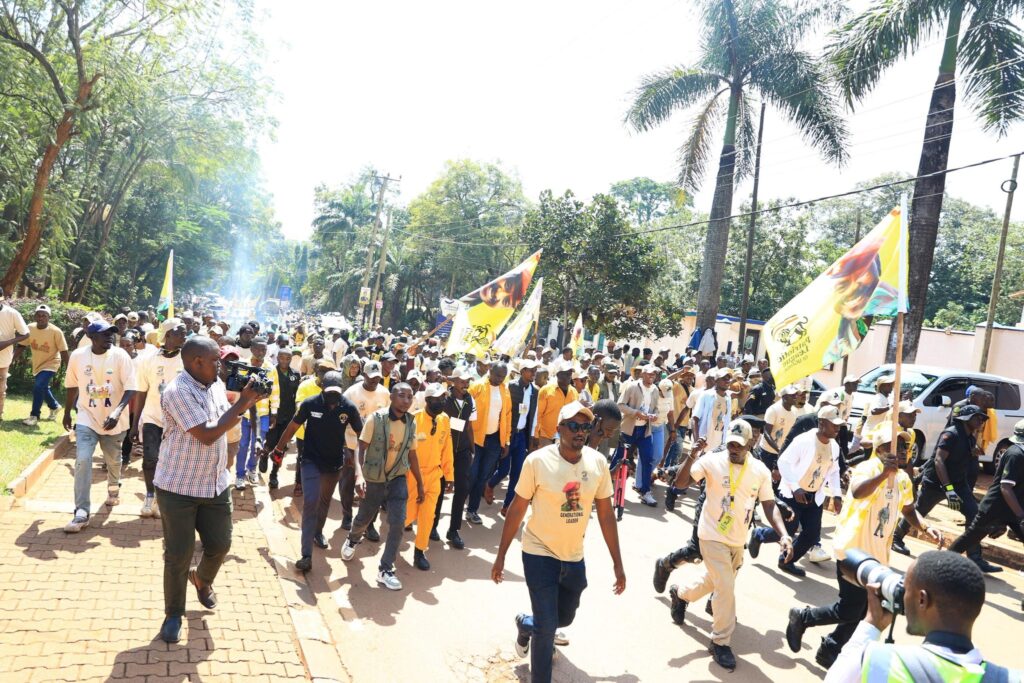
Emerging Counter-Movements: “Original MK” Narratives
Adding to the fragmentation is the emergence of splinter narratives, including references to an “Original MK” and plans to document internal experiences through publications such as:
“Through the Concrete with PLU’s Foot Soldiers”
This signals a shift toward:
- Internal storytelling
- Competing historical narratives
- Potential reputational battles within the movement
Such developments often indicate a movement entering a phase of ideological and structural redefinition.
Conclusion: A Movement at a Crossroads
The events surrounding Hon.Kabanda’s statement, Gashumba’s clashes, and Gen Muhoozi’s silence are not isolated incidents, they are symptoms of a deeper structural crisis within PLU.
Key challenges ahead include:
- Rebuilding internal trust
- Establishing clear governance systems
- Managing competing personalities and power centers
- Refocusing on ideological clarity and long-term goals
Without deliberate intervention, the movement risks transitioning from a rising political force to a case study in internal disintegration.
For now, the question remains:
Can PLU evolve into a structured political institution or will it collapse under the weight of its own contradictions?