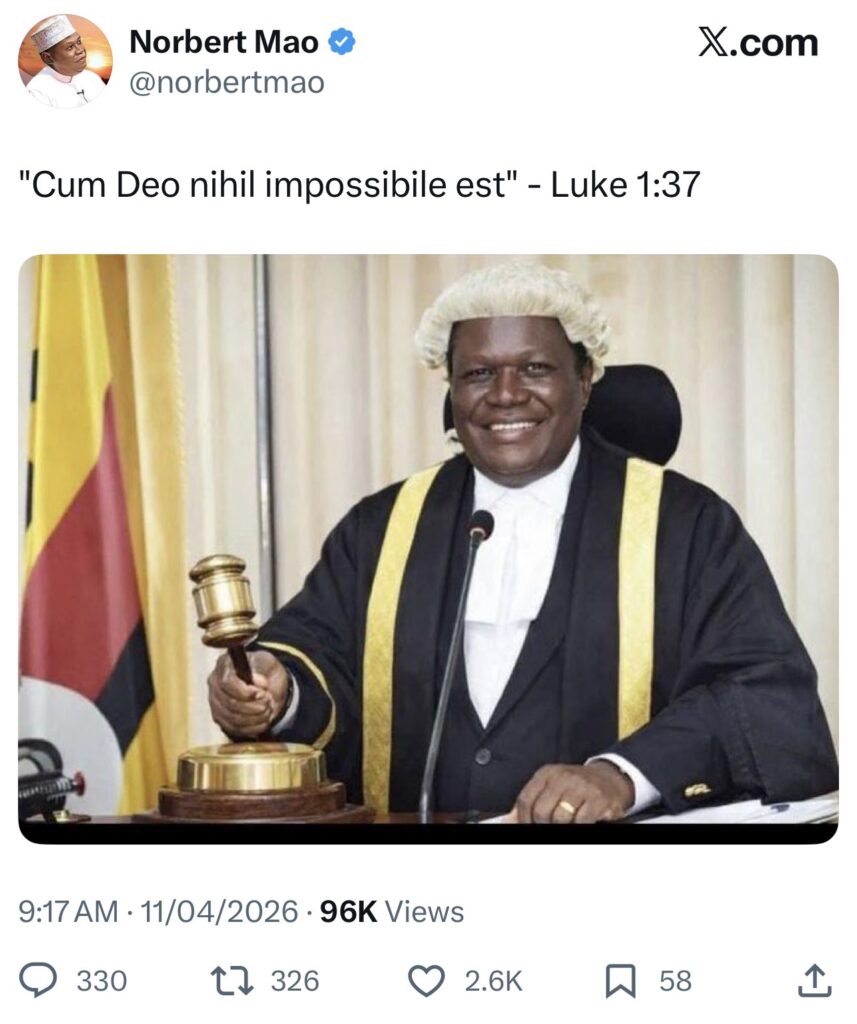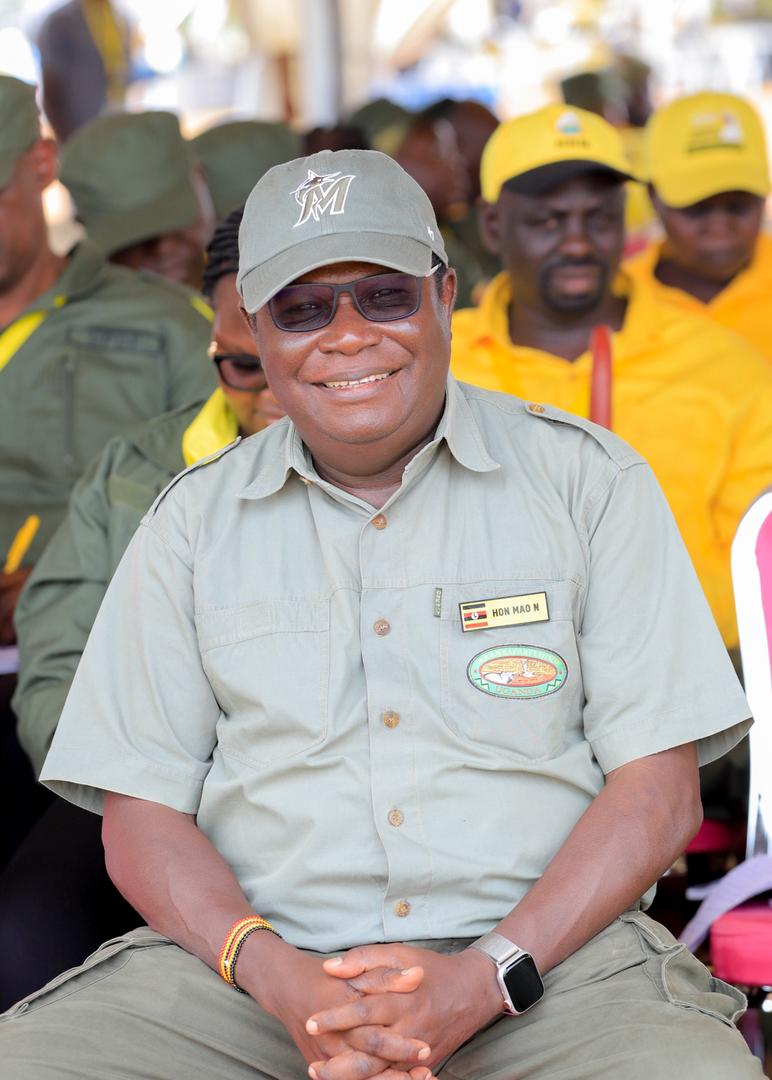

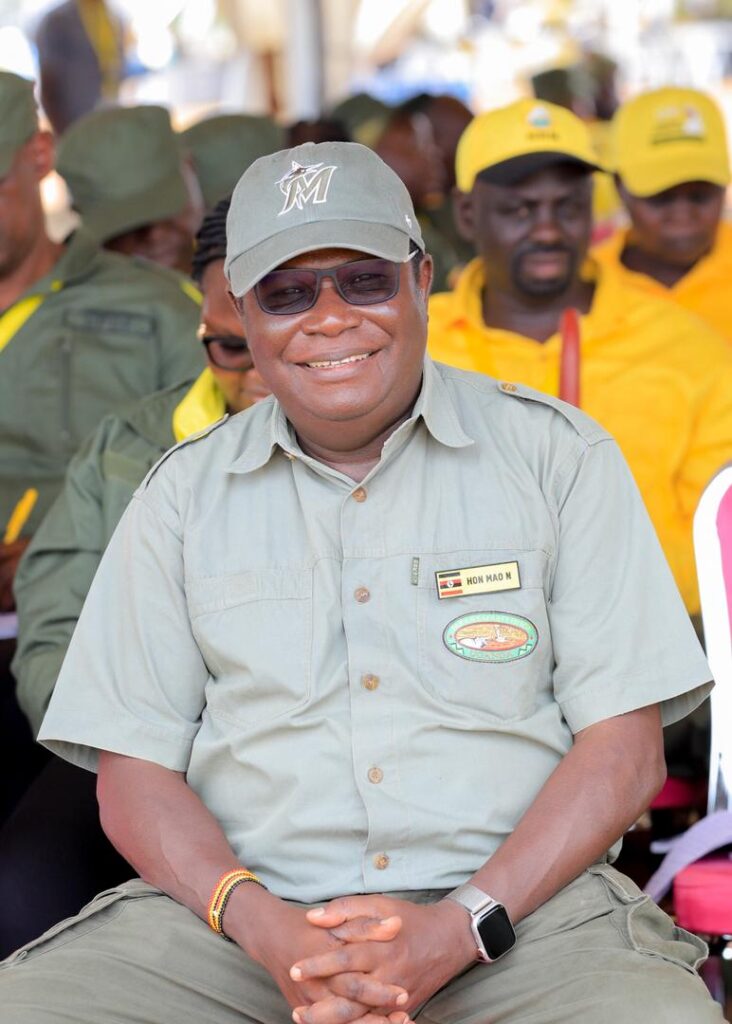
As Uganda approaches the close of the 11th Parliament, the political spotlight is once again fixed on Hon.Norbert Mao not only as Minister of Justice and Constitutional Affairs under the DP–NRM cooperation agreement, but also as the elected Member of Parliament for Laroo–Pece Division in Gulu City. His dual role as both a government insider and a historically opposition figure now places him at the centre of one of the most consequential political transitions in recent years.
The expiration of the cooperation agreement coincides with two major developments: a public intervention by Gen.Muhoozi Kainerugaba urging Mao to step back from a potential Speakership bid, and a gisted proposal associated with Rt.Hon.Anita Annet Among seeking to extend the term of both Members of Parliament and the Presidency from five to seven years.
Taken together, these developments point to a deeper reconfiguration of political power behind closed doors.
Mao’s Unique Position: Insider, Outsider, and Elected Mandate
Unlike many appointed figures in government, Mao carries the legitimacy of an elected constituency in Laroo–Pece. This gives him:
- A direct electoral mandate independent of the NRM
- A political base in Northern Uganda, historically sceptical of central power
- Leverage in national politics that goes beyond his ministerial appointment
However, this also complicates his choices. Any move perceived as aligning too closely with the NRM risks alienating his constituents and further fracturing the Democratic Party’s already strained identity.
The Cooperation Agreement: Ending Without Clear Succession
The DP–NRM agreement was explicit: Mao’s ministerial role and DP’s structured support to government were tied to the life of the current Parliament. With that term ending, there is no automatic extension or renewal mechanism publicly outlined.
This creates a vacuum one that is now being filled by informal political signalling, most notably from General Muhoozi Kainerugaba.
The DP–NRM cooperation agreement was, from its inception, a marriage of political convenience rather than ideological convergence. Structured around principles of mutual respect, constitutionalism, and national unity, the agreement sought to:
- Guarantee parliamentary stability by securing DP support for NRM on key votes
- Integrate DP leadership into government through cabinet appointments
- Create a framework for dialogue on constitutional reform and national governance
By Mao’s acceptance of the cooperation deal in 2022 was actually controversial within DP ranks. While he framed it as a pragmatic step toward influencing governance from within, many viewed it as a dilution of DP’s opposition identity.
Now, with the agreement ending, Mao faces three broad pathways:
1. Reasserting DP Independence
Mao could attempt to reposition DP as a fully independent political force, distancing himself from the NRM. However, this path is fraught with challenges:
- Internal party divisions have deepened since the agreement
- DP’s grassroots support base has been eroded in some regions
- Rebuilding credibility as an opposition leader may prove difficult
2. Formal Integration into the NRM Establishment
Though General Muhoozi’s statement suggests a second possibility: absorption into the broader NRM political structure. This could come in the form of:
- A senior government appointment
- A strategic advisory or diplomatic role
- Continued influence within constitutional and legal reform processes
However, such a move would likely mark the final ideological shift away from DP’s historic opposition stance.
3. Pursuing Parliamentary Leadership (Speakership)
The third and most politically sensitive option is Mao’s potential bid for Speaker of Parliament, a position currently held by Rt. Hon.Anita Annet Among.
This is where General Muhoozi’s intervention becomes significant.
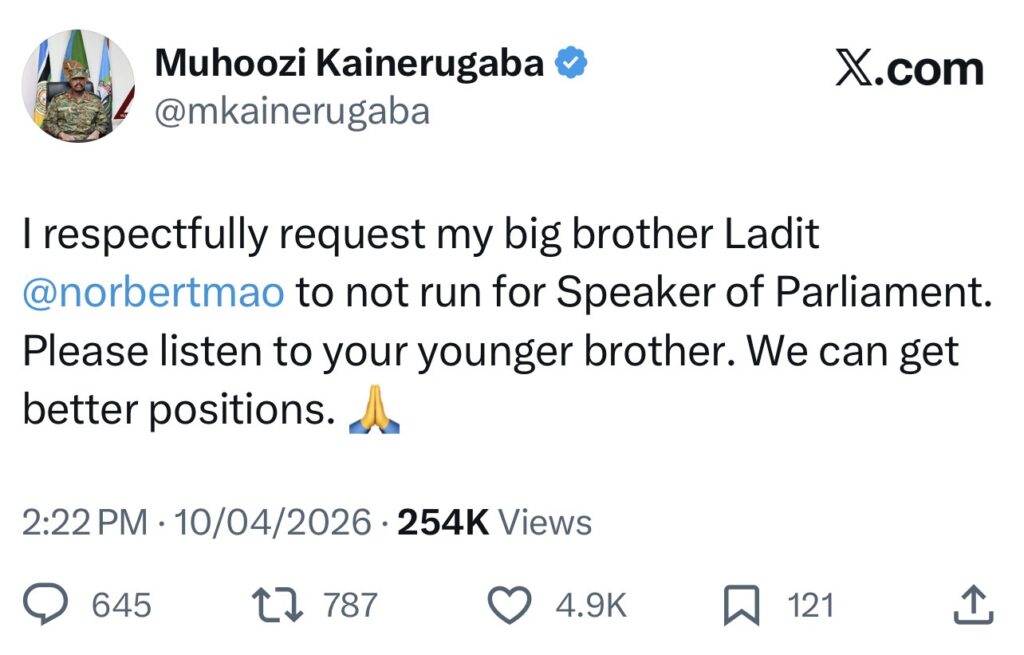
Gen.Muhoozi’s Intervention: A Warning Wrapped in Opportunity
Gen.Muhoozi’s appeal to Mao not to contest for Speaker paired with a promise of “better positions” should not be read at face value. In Uganda’s political ecosystem, such statements often reflect:
- Pre-agreed internal positions within the ruling elite
- Efforts to avoid open contestation for sensitive offices
- A mechanism to manage political allies without public confrontation
In essence, Mao is being advised to step away from a competitive arena (Speakership) in favour of a negotiated placement within the system.
The Speakership, currently held by Rt.Hon.Anita Among, is not just a parliamentary role it is a strategic pillar of executive influence over the legislature.
Among’s continued hold on the position appears closely tied to broader legislative ambitions, including the emerging proposal to extend the term limits of both MPs and the President from five to seven years.
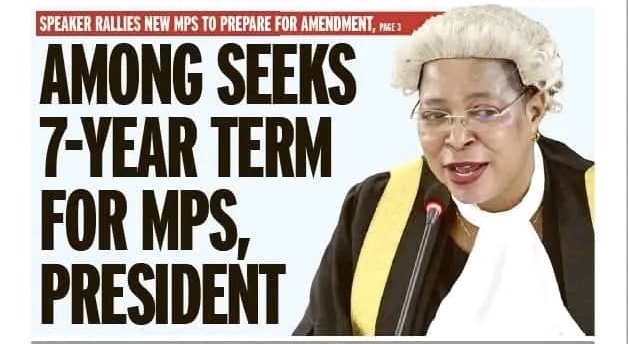
The 7-Year Term Proposal: Reform or Political Strategy
The proposal to extend term limits raises profound constitutional and political questions. On the surface, proponents may argue:
- Longer terms allow for policy continuity and stability
- Reduced frequency of elections lowers public expenditure
- It provides more time for implementation of long-term national programs
However, beneath these arguments lies a more strategic layers:
1. Synchronizing Political Timelines: Extending terms could align electoral cycles with broader regional or internal political transitions, creating a more controlled succession environment.
2. Managing Political Uncertainty: With shifting dynamics inside the ruling establishment, a longer term could serve as a buffer against electoral unpredictability, buying time to consolidate power.
3. Preserving Institutional Control: Maintaining the current parliamentary leadership especially the Speakership ensures continuity in managing legislative agendas, including sensitive constitutional amendments.
4. Elite Consensus Building: Such a significant constitutional change would require broad elite agreement. Mao’s role as Justice Minister and his background in constitutional law positions him as a potentially critical actor in legitimizing or shaping this process.
How Mao Can Perfectly fit In
Mao’s options must now be viewed through the lens of these broader strategic shifts:
If He Pursues Speakership
He risks:
- Direct confrontation with entrenched NRM interests
- Isolation within the current power structure
- Undermining any behind-the-scenes negotiations
If He Steps Aside
He could:
- Be integrated into a more influential but less visible role
- Play a key part in constitutional reform processes, including the term extension debate
- Retain favour within the ruling establishment while maintaining some DP identity
If He Breaks Away
Returning fully to opposition politics would:
- Rebuild ideological clarity for DP
- But significantly reduce his immediate access to state power
The Silent Negotiations: Power, Reform, and Political Survival
The convergence of these developments suggests that critical decisions are being shaped away from public view:
- The future of the DP–NRM relationship
- The fate of the Speakership
- The possibility of constitutional amendments extending political terms
Mao’s silence, therefore, may not be indecision but, participation in ongoing high-level negotiations where outcomes are determined long before public announcements are made.
In Conclusion; Uganda may be witnessing not isolated political events, but a coordinated transition phase one that involves:
- Consolidating parliamentary leadership
- Managing influential political actors like Mao
- Preparing the ground for potential constitutional changes
For Hon.Norbert Mao, the stakes are unusually high. As an elected MP for Laroo–Pece, a cabinet minister, and a national political figure, his next move will signal more than personal ambition, it will reveal where the balance of power is shifting in Uganda’s political future.
And at the heart of it all remains:
This is not about leadership positions rather a quiet redesign of Uganda’s political timeline itself.