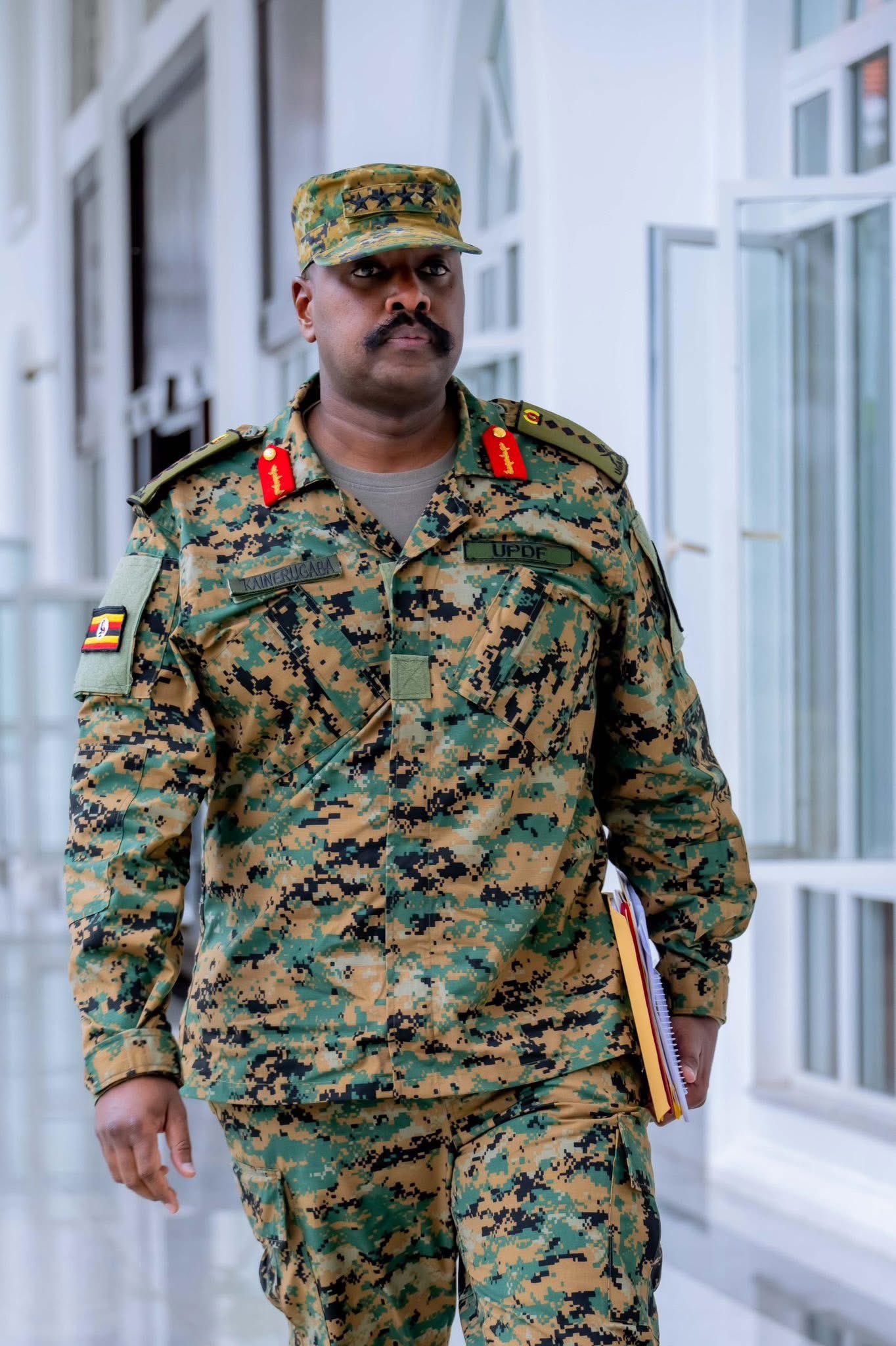

In his recent remarks “I am not the Messiah. I am a voice in the wilderness preparing the way for the Messiah. The Messiah is General Salim Saleh.”
This declaration sparked debate across Uganda and the region, not only because of its dramatic language but also due to its implications for the country’s political future and succession planning within the ruling National Resistance Movement.
Decoding the Statement
At first glance, Gen Muhoozi’s words may seem symbolic or even religious in tone. However, within Uganda’s political context, they reveal several key messages:
1. Rejecting the Notion of Being the Ultimate Leader.
By declaring he is not the “Messiah,” General Muhoozi signals that he is not seeking the ultimate leadership role, at least in the immediate future.
2. Positioning as a Strategic Influencer.
Referring to himself as a “voice in the wilderness” implies he is shaping public perception and political loyalty. He remains a central figure in military and political circles, preparing the environment for leadership transition.
3. Elevating General Salim Saleh.
Saleh, a long-serving military leader, is described as the “Messiah,” a symbolic acknowledgment of his experience, authority, and influence. This framing signals respect for established senior leadership and may also be a strategic move to strengthen internal party cohesion.
In this essence, General Muhoozi’s statement communicates influence without overtly claiming the top office, while highlighting continuity within the ruling elite.
2026–2031: Transition Landscape
During this period:
•Power may shift behind the scenes to figures like General Muhoozi (UPDF Army Chief and influencer) and Salim Saleh (Senior Adviser).
•The NRM inner circle consisting of party loyalists and technocrats will play a critical role in guiding policies and maintaining stability.
•This stage is about preparing successors, managing loyalty, and consolidating influence, rather than conducting overt leadership changes.
Post-2031 Succession Scenarios
Possible outcomes after President Museveni eventually retires include:
•Emergence of a NRM-supported civilian or military successor, with legitimacy ensured through the party and elite consensus.
•General Muhoozi continuing to wield influence behind the scenes as a key power broker.
•Salim Saleh guiding or endorsing the next leader, maintaining continuity within the ruling establishment.
Overall, Uganda’s leadership transition is likely to be gradual and strategic, with careful coordination among top military and political figures to prevent instability.
Conclusion
Gen Muhoozi’s statement that he is “not the Messiah” is both symbolic and strategic. It reflects a careful navigation of Uganda’s political terrain, signaling preparation and influence without claiming the presidency. Meanwhile, his elevation of General Salim Saleh underscores the importance of experience, seniority, and loyalty in the NRM’s succession planning.
From 2026 to 2031, Uganda is expected to experience a managed, behind-the-scenes transition, with the ruling elite controlling both formal political processes and informal influence networks. For observers and citizens alike, these years will reveal how continuity, loyalty, and strategic planning shape the country’s next leadership chapter.