
1. Introduction: The Political Context of the Book
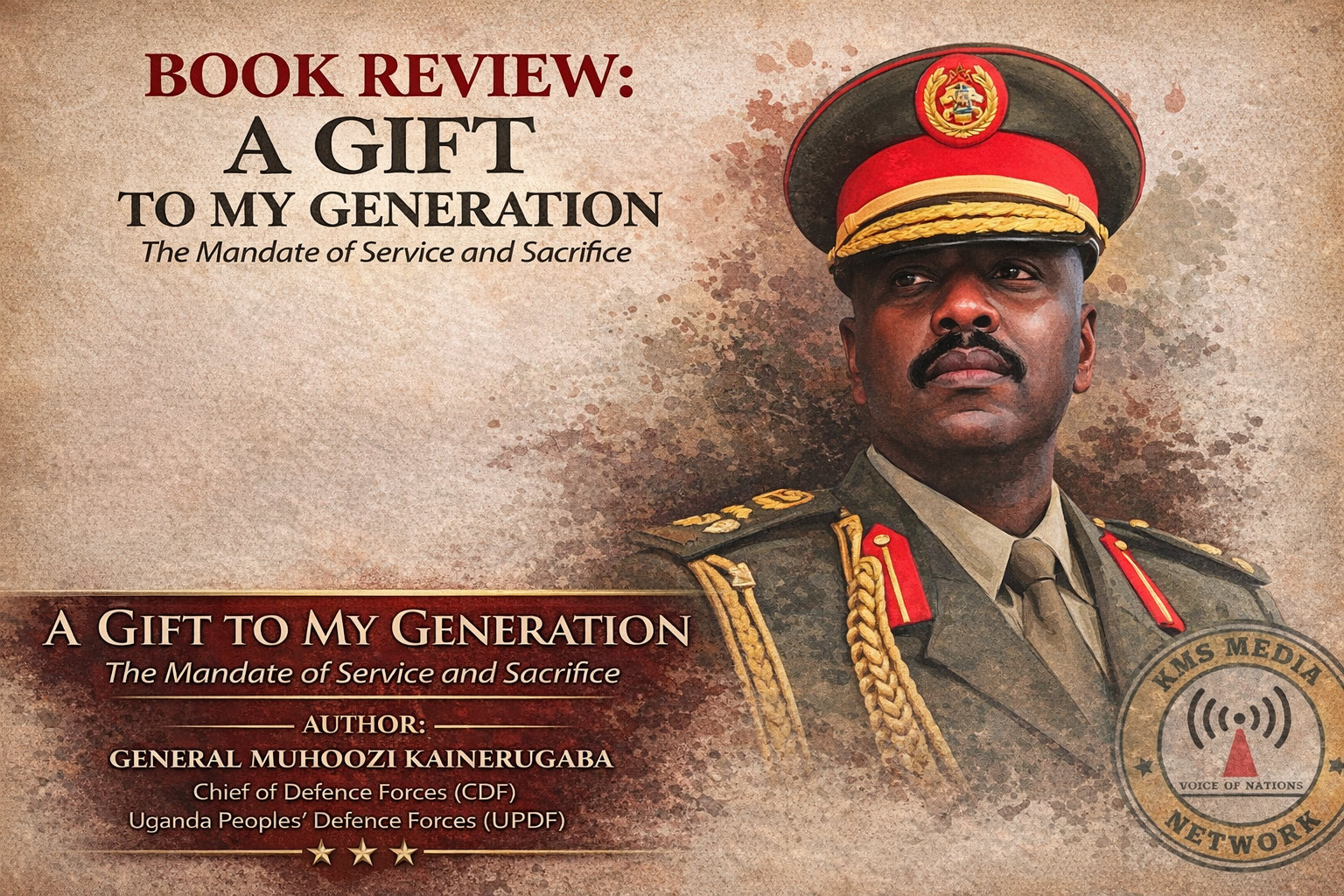
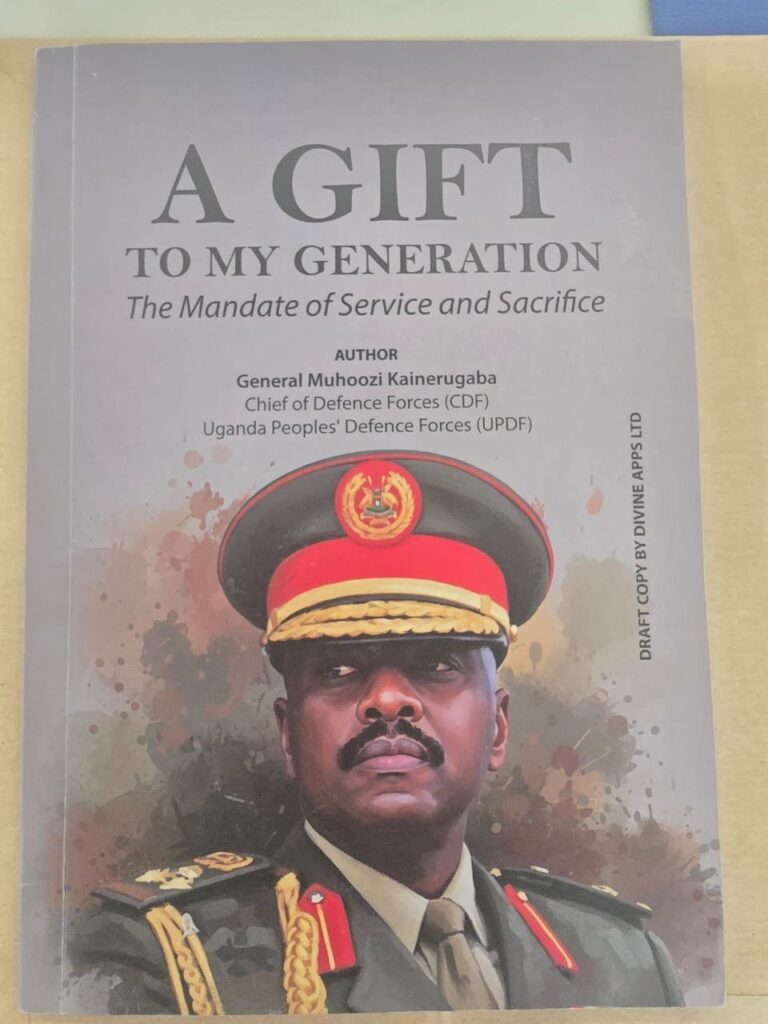
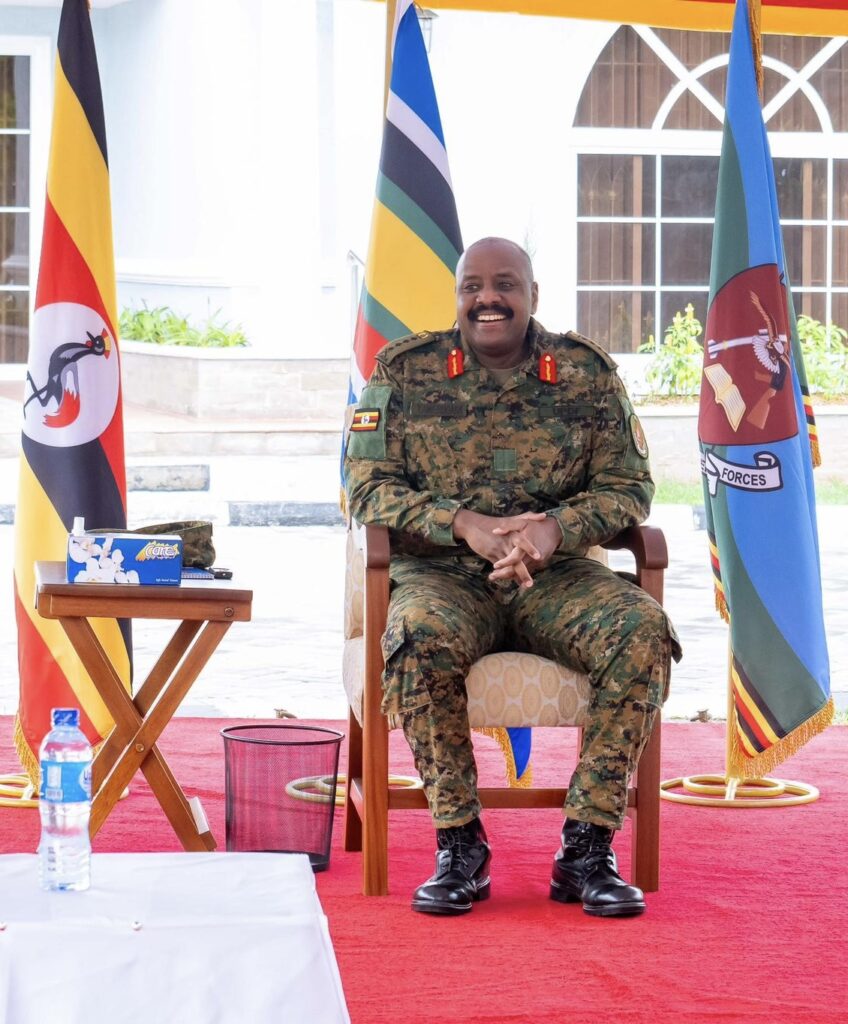
“A Gift to My Generation: The Mandate of Service and Sacrifice” is not merely a personal reflection; it functions as a political-military manifesto directed to Uganda’s emerging leadership generation. The author, General Muhoozi Kainerugaba, currently serves as Chief of Defence Forces of the Uganda People’s Defence Force (UPDF) and is also a central figure in Uganda’s evolving political landscape.
The book must be read against three major realities:
- The long rule of Yoweri Museveni, which began in 1986.
- Growing debates about generational leadership transition in Uganda.
- Speculation around Gen.Muhoozi’s future political role, including a potential presidential bid.
Therefore, the book is best interpreted as:
- A generational political doctrine
- A military-inspired philosophy of leadership
- A strategic narrative about Uganda’s future
2. Core Thesis of the Book
The central argument of the book revolves around one principle:
Every generation receives a national “gift” from the sacrifices of the previous generation and must protect and advance it.
According to Gen. Muhoozi, the “gift” to his generation is peace, stability, and state institutions built after the National Resistance Movement revolution of 1986.
The book argues that:
- Uganda’s stability was earned through struggle
- The current generation must preserve it through service
- Leadership requires discipline, sacrifice, and loyalty to the state
This concept mirrors statements often made by Gen.Muhoozi emphasizing sacrifice for national security and service to Uganda.
3. The Ideological Foundation
The book is heavily influenced by three ideological streams:
1. Revolutionary Legacy
Gen Muhoozi presents the National Resistance Movement revolution as the foundational turning point for modern Uganda.
Themes include:
- Liberation struggle
- Patriotic duty
- National unity
The book frames Uganda’s history in three phases:
| Phase | Description |
| Pre-1986 | Political instability |
| Liberation struggle | Revolutionary transformation |
| Post-1986 | Stability and state-building |
This interpretation aligns with official narratives often promoted within government and military institutions.
2. Military Discipline as a National Model
Gen.Muhoozi argues that military values should guide national leadership, including:
- discipline
- loyalty
- sacrifice
- patriotism
- duty
This philosophy is typical of leaders who emerge from military structures.
As a long-serving UPDF commander and former head of Special Forces Command, Gen.Muhoozi’s worldview is shaped strongly by military institutional culture.
3. Generational Responsibility
The title itself signals the most important concept: intergenerational duty.
According to the book:
- The older generation fought wars
- The current generation must build prosperity
- The next generation must defend sovereignty
This theme resonates with African post-liberation political narratives.

4. Leadership Philosophy in the Book
Gen.Muhoozi outlines a leadership model based on five pillars.
1. Service before power
Leadership is framed as national duty, not privilege.
2. Sacrifice
The book emphasizes that national security and development require personal sacrifice.
3. Patriotism
Gen.Muhoozi promotes strong national identity above ethnic or partisan interests.
4. Institutional strength
He highlights the importance of strong institutions like the military.
5. Youth leadership
The book strongly targets young Ugandans and the emerging leadership class.
5. Strategic Messaging: Hidden Political Signals
While presented as philosophical reflections, the book contains implicit political messaging.
Signal 1: The “Muhoozi Generation”
The narrative positions Gen.Muhoozi as the symbol of a new generation of leadership.
This connects directly with movements around him such as:
- the MK Movement
- the Patriotic League of Uganda
These platforms frame him as a generational leader preparing for national leadership.

Signal 2: Legitimizing Military Leadership
The book subtly legitimizes the idea that military leaders can transition into national political leadership.
This pattern is common across Africa:
Examples include:
- Rwanda
- Ethiopia
- Angola
The book suggests that military discipline produces effective national leaders.
Signal 3: Continuity of the NRM System
Rather than proposing radical change, the book argues for:
- continuity
- stability
- institutional preservation
This positions Gen. Muhoozi not as a revolutionary challenger but as a successor preserving the existing system.
6. Criticisms and Controversies Surrounding the Narrative
The book’s themes have not been universally accepted.
Several concerns arise.
1. Dynastic Politics
Many argue that Gen.Muhoozi’s political rise may represent family succession in Ugandan leadership, since he is the son of President Museveni.
Some political figures warn that leadership should not pass “from father to son” in a republic.
This debate forms the background context of the book.
2. Militarization of politics
Some worry about the blurring line between military leadership and political power.
The concern is that:
- the military could dominate civilian politics
- national governance may become overly security-centered.
3. Narrative control
The book strongly promotes the official liberation narrative, which critics say may underrepresent:
- opposition movements
- political pluralism
- democratic contestation.
7. Strategic Audience of the Book
The book targets three main audiences.
1. Young Ugandans
The message:
You inherited a stable country, protect it.
2. Military officers
The message:
Your loyalty and discipline must guide national leadership.
3. Political elites
The message:
Leadership transition must remain within the ideological framework of the revolution.
8. Literary Style and Structure
The book follows a manifesto-style format rather than academic writing.
Characteristics include:
- motivational language
- patriotic rhetoric
- historical references
- leadership reflections
The tone is inspirational and ideological rather than analytical.
9. Strategic Impact of the Book
The book serves several strategic purposes:
1. Image building
It presents Gen.Muhoozi as:
- thinker
- strategist
- patriot
- generational leader.
2. Political positioning
It introduces him as a national voice beyond the military.
3. Generational branding
The title itself brands leadership around “my generation.”
10. Overall Evaluation
Strengths
• Strong patriotic narrative
• Clear leadership philosophy
• Appeals to youth and national pride
• Connects military discipline to governance
Weaknesses
• Limited engagement with democratic critique
• Heavy reliance on revolutionary narrative
• Perceived political messaging
11. Conclusion
“A Gift to My Generation: The Mandate of Service and Sacrifice” is best understood as a generational manifesto from one of Uganda’s most powerful military figures.
The book attempts to achieve three objectives:
- Define the legacy of the liberation generation.
- Frame the responsibility of the next generation of leaders.
- Position Gen.Muhoozi Kainerugaba as a central figure in that transition.
In essence, the book is not only about service and sacrifice, but about who will shape Uganda’s future leadership narrative.